<!DOCTYPE html>
How to Manage Frozen Tracks and Brittle Torsion Springs in Sub Zero Weather
How to Manage Frozen Tracks and Brittle Torsion Springs in Sub Zero Weather
A-24 Hour Door National Inc serves Buffalo, NY and Erie County with 24/7 commercial door repair and industrial door maintenance. The team focuses on roll-up doors, sectional doors, and loading dock safety in lake-effect snow and sub-zero wind chills common to Western New York.
Executive Entity Report: Buffalo, NY Facilities and Winter Door Failures
This report frames the commercial door risks that show up each winter across Buffalo, from South Buffalo and the First Ward along the Buffalo River, to Elmwood Village and Allentown, to logistics corridors near I-190, the Peace Bridge, and Canalside. The goal is clear and simple. Keep high-cycle industrial doors moving when temperatures drop, humidity spikes along the lakefront, and salt corrosion accelerates at loading docks.
The primary service focus centers on commercial door repair, rolling steel door installation, industrial overhead doors, loading dock repair, sectional door maintenance, and emergency board-up service. The symptom patterns line up with Buffalo’s climate. Frozen tracks, brittle torsion springs, misaligned slats, off-track doors, motor burnout, salt corrosion, dented bottom bars, and photo-eye obstruction. The parts in play include torsion springs, door slats, guide tracks, barrel assemblies, endlocks, weather stripping, bottom brushes, bearing plates, chain hoists, and door curtains. On the operator side, the most common appliance types include jackshaft openers, high-speed rolling doors, fire-rated doors, security grilles, insulated sandwich doors, dock levelers, and radio controls.
In practice across Erie County, teams move daily between Buffalo zip codes 14201, 14202, 14203, 14204, 14209, 14210, and 14221, with frequent calls in Kaisertown, Lovejoy, North Park, and warehouse clusters near KeyBank Center, Buffalo City Hall, Albright-Knox Art Gallery, Buffalo Riverworks, and the University at Buffalo. Neighboring service areas include Cheektowaga, Amherst, Tonawanda, West Seneca, Lackawanna, Orchard Park, and Williamsville.
Brand coverage spans mass market and high-performance equipment. Overhead Door Corporation, Wayne Dalton, Clopay, LiftMaster, Genie, and Amarr remain common across older buildings and mixed-use properties. High-performance sites often run Rytec high-speed doors, CornellCookson rolling steel systems, Raynor, and Hörmann units. This range reflects Buffalo’s historic manufacturing corridor and the shift to modern logistics hubs that need speed, sealing, and uptime in winter.
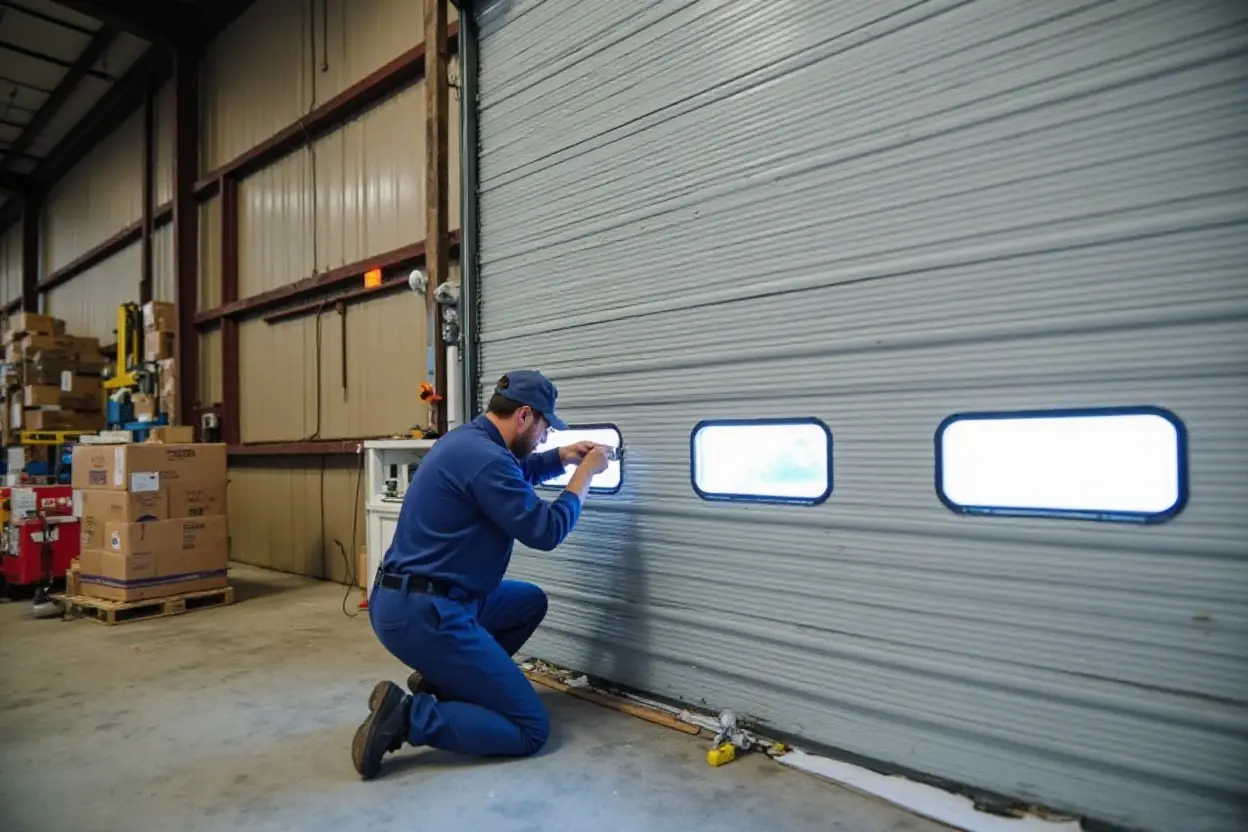
Why A-24 Hour Door National Inc gets the call in sub-zero weather comes down to experience and readiness. Dispatch runs 24/7 emergency service with AAADM certified technicians, same-day repair coverage, fully insured status as a commercial contractor, OSHA-compliant safety testing, and preventative maintenance plans built around real cycle counts and real winter exposure. The promise is simple. Fast stabilization, a clean technical diagnosis, and a fix that holds up to lake-effect cycles.
Why Buffalo Winter Breaks Doors: Metal, Ice, Salt, and Power
On the engineering side, Buffalo’s winter problems are predictable. Steel changes dimension as temperatures fall, ice builds in guide tracks and on bottom bars, brittle fracture risk rises in work-hardened torsion springs, and salt accelerates galvanic activity on slats and fasteners. At the same time, power units and jackshaft operators draw more current when curtains bind in frozen guides. That load spike causes motor heating, contact wear, and trip events under heavy snow loads.
Thermal contraction is the first driver. A 12-foot rolling steel curtain and its guide tracks can shrink several millimeters between a 70°F plant and a loading dock at 0°F. That shift reduces side clearances. Endlocks start to kiss the guides. With any misalignment, the curtain rakes the track faces. Add ice and brine, and the curtain can freeze to the sill or stall mid-run. The motor then tries to overcome the bind, which causes shear on the torque limiter, chain hoist tension spikes, and early gearbox wear.
Next is spring behavior. Torsion springs hold energy through twist. As steel gets cold, ductility drops. A high-cycle spring with surface nicks or corrosion pits becomes a stress riser. Under load, a cold, fatigued spring can snap at the pigtail or in the coil body. When that happens, door balance disappears and the curtain becomes dead weight. Operators then strain, brackets flex, and bearing plates misalign. In Buffalo’s sub-zero days with wind off Lake Erie, these failures cluster on mornings after rapid temperature swings.
Finally, salt works fast in this market. Erie County road treatments track straight onto dock aprons on trailer tires and forklift wheels. Brine drips into guide pockets and bottom bars. Untreated, that brine works into slat joints, endlocks, and fasteners. Rust thickens and clearance tightens, which feeds more friction and heat. This is the pattern seen in South Buffalo warehouses near the river and in facilities near the Peace Bridge with high truck volume.
From Symptom to Diagnosis: What Frozen Tracks and Brittle Springs Look Like
Frozen tracks tell on themselves. The door opens a few inches and stalls. The operator groans or trips. A manual lift on the chain hoist feels sticky and one-sided. Ice often packs near the first three feet of guide depth where meltwater refreezes. A photo-eye obstruction can also be present when frost builds on the lens. The fix starts by releasing the tension and heat-treating the guides with low-temp de-icer applied sparingly to avoid residue on brake pads.
On torsion spring failures, the signs are loud. A report like a snapped cable or a steel bar drop. The curtain slams down or refuses to budge. Balance tests fail. In a jackshaft operator setup, the motor turns but the door barely moves, or the brake chatters and releases hard. With dual-spring systems, one broken spring fools the eye. The door may still move but strains the remaining spring and twists the barrel assembly. Timely replacement of both springs, matched to cycle life and door weight, avoids repeat failure.
Misaligned slats appear as a wavy curtain line and audible scraping. Off-track doors show scuff lines on the guide faces and bright metal on endlocks. Motor burnout on high-torque starts often follows three days of partial freezing. Salt corrosion shows first as orange streaks at fasteners and on bottom bars. Early denting of bottom bars also shows up after winter vehicle impacts when traction is low on dock plates.
A Safe, Quick De-Ice Checklist for Roll-Up Doors
This short field routine works for Buffalo docks during zero to ten-degree mornings. It reduces load on the operator and cuts downtime. It does not replace full service when springs or slats are compromised. Keep personnel clear of the door path during all steps.
- Lock out the operator and chock the door. Switch to manual chain hoist mode.
- Brush loose snow from guide openings, bottom bar, and sill. Avoid packing snow deeper into the guides.
- Apply a controlled amount of low-temp de-icer along the lower guide depth and sill. Do not flood the brake or motor.
- Warm the guide faces with a safe heat source. A portable forced-air heater placed off to the side works. Keep flame away from seals and curtains.
- Test manual lift in six-inch increments. If binding remains, stop and schedule roll-up doors repair in Buffalo with a spring and track inspection.
After thaw, switch to a low-temperature lubricant on the guide faces and chain hoist. A PAO-based oil with anti-wear additives performs well near 0°F. Avoid heavy greases that thicken. Wipe excess to reduce dirt pickup. Replace weather stripping and bottom brushes if they wick water into the guides.
Torsion Spring Engineering in Sub-Zero Conditions
Cold affects torsion spring steel at a micro level. Below freezing, yield strength rises while toughness falls. That change shifts failure from plastic deformation to brittle fracture in springs with surface defects. The remedy is twofold. First, select high-cycle springs with a corrosion-resistant finish and correct wire diameter for the curtain weight and desired cycle life. Second, control stress by verifying the winding count and torque matches the door assembly, not a guess from a prior retrofit.
On Buffalo doors with heavy winter use, high-cycle ratings in the 50,000 to 100,000 cycle range pay off. Many First Ward and South Buffalo warehouses hit 120 to 200 cycles a day during peak periods. That load eats standard springs in one to three winters. A-24 Hour Door National Inc sets spring specs off measured curtain weights, drum diameters, and lift types. The crew pairs springs in matched sets and replaces in pairs to keep balance. Bearing plates and center brackets get cleaned and checked for elongation at bolt holes, which signals over-torque from past binds.
During installation, technicians apply light oil along the spring coils to resist flash rust from salt-laden humidity. They also verify parallel alignment of the barrel assembly and guide tracks. Misalignment increases side load on endlocks and shortens spring life. For cold storage sites running Rytec high-speed rolling doors or CornellCookson insulated curtains, the team chooses springs and counterbalance components rated for the door’s speed and mass, then checks operator ramp profiles so starts do not shock the system.
Components That Hate Winter and How to Protect Them
Guide tracks take the worst of Buffalo’s freeze-thaw. A light polish with a non-residue protectant followed by a thin film of low-temp lubricant keeps ice from anchoring to bare steel. Bottom bars should carry drain paths so meltwater does not pool at the sill. Weather stripping and bottom brushes act as thermal breaks and snow brakes at once. Worn seals leak heat, invite ice flare-ups in guides, and force operators to work harder.
Door slats and endlocks need clean engagement. If salt has etched the slats, a minor grind and seal can buy time, but pitted slats grow drag fast. Replace slats and rusted endlocks before they score the guides. Bearing plates must spin freely. If the grease has congealed, purge and replenish with a lubricant that holds viscosity near freezing. Chain hoists, particularly those in older Wayne Dalton and Raynor installs, often carry dry chains in winter. A light oil on chain links prevents stick-slip and reduces shock on the jackshaft.
Photo-eyes strand many Buffalo doors in January. Frost fogs the lens, and salt spray from plows coats housings. Clean lenses weekly, relocate emitters out of direct draft where possible, and add a small shroud. Verify safe clearances. Do not defeat the photo-eye to force movement during a rush period. That choice leads to injury risk and liability. For fire-rated doors, coordinate a drop test after winter to confirm the release system has not corroded or jammed.
Local Response and Winter Readiness Around Buffalo
Service requests cluster around 14203 and 14210 during lake-effect bursts, driven by riverfront winds and open dock exposure. Teams position close to I-190 for access to South Buffalo, First Ward, and warehouse lines near Buffalo Riverworks and KeyBank Center. Calls also rise near Canalside and along the Buffalo Medical Corridor, where round-the-clock deliveries cannot wait for a thaw. In 14201 and 14202 around Allentown and downtown, many storefront grilles and security shutters need light de-icing and realignment after night freezes.
Dispatch times matter when a frozen curtain pins a dock. A-24 Hour Door National Inc runs 24/7 trucks across Buffalo, Cheektowaga, Amherst, Tonawanda, Lackawanna, West Seneca, Orchard Park, and Williamsville. The crew targets a 60-minute response window during severe weather for emergency board-up and stabilization. Same-day spring replacement and motor swaps follow once the site is safe and the parts list is locked.
- Zip code coverage: 14201, 14202, 14203, 14204, 14209
- South and East corridors: 14210 and 14221 with frequent dock calls
- Neighborhood focus: South Buffalo, First Ward, Kaisertown, Lovejoy, North Park
- Landmark vicinity: Peace Bridge, Buffalo Riverworks, Canalside, Buffalo City Hall
- Campus and cultural sites: University at Buffalo and Albright-Knox Art Gallery areas
Case Notes From the Floor: What Solved It
A food distributor off South Park Avenue in South Buffalo ran two high-speed doors for cold storage. Overnight, wind chills hit negative digits. Both guide sets froze. The operators tripped on start, and the manual hoist bound ten inches up. The team arrived with low-temp de-icer, a blower, and PAO lubricant. After a controlled thaw, the crew found bottom brushes matted with slush and endlocks scuffed. They replaced the brushes, polished guide faces, re-lubed, and reset the operator ramp to soften starts. The doors returned to full speed within two hours. A follow-up preventative plan set weekly seal checks during January and February.
Near KeyBank Center, a multi-tenant dock with an older CornellCookson rolling steel curtain reported a loud snap at open. One torsion spring had fractured at the pigtail. The remaining spring carried the load but twisted the barrel. The crew locked out the operator, blocked the curtain, and replaced both springs to a matched high-cycle pair sized off measured door weight. They inspected bearing plates, replaced a worn plate on the drive side, and verified drum alignment to stop cable walk. The operator drew normal current on restart, and the site passed a balance test with a two-finger lift at midpoint.
In Amherst, a retail storefront security grille hung crooked after a night freeze and a delivery cart impact. The bottom bar had a small dent that rubbed one guide. The fix was to pull the grille, straighten the bottom bar on a brake, replace the bent endlock, and clean the guide pocket. The team added a small rubber sill ramp to reduce water pooling at the threshold, which cut refreeze risk.
Brand Competence and Code Compliance
Buffalo sites carry a mix of equipment across years and building types. A-24 Hour Door National Inc services LiftMaster jackshaft operators, Wayne Dalton commercial systems, Overhead Door and Clopay sectional doors, and Genie and Amarr hardware in mixed-use buildings. On the high-performance side, Rytec high-speed doors run in cold storage and high-traffic bays, and CornellCookson rolling steel curtains protect heavy openings with fire-rated options. Raynor and Hörmann doors appear in many mid-size facilities across Cheektowaga and Tonawanda.
Each brand has service nuances. LiftMaster jackshaft operators require careful brake cleaning in salt-heavy docks and verification of photo-eye logic after deep cold. Wayne Dalton torque tubes on sectional doors need attention to cable drums in freeze cycles. Rytec controllers benefit from a cold-start profile check to avoid shock loading. Fire-rated rolling doors need yearly drop testing with OSHA and NYS safety documentation, plus post-winter verification when salt and dust may have fouled the release mechanisms.
Maintenance That Prevents Winter Breakdowns
A preventative plan tied to seasons works best in Western New York. Schedule a fall service to prepare for sub-zero days, and a late-winter review to catch salt damage. In the fall, technicians should check torsion spring life based on cycle counts, inspect cables and endlocks, confirm guide alignment with a straightedge, and verify operator current draw on a test lift. Replace weather stripping and bottom brushes before the first freeze. Apply low-temp lubricant to tracks and chain hoists, and seal slat scratches before rust starts.
During peak winter, keep a simple dock routine. Brush out guide pockets daily. Inspect photo-eyes for frost and salt once per shift. Wipe down bottom bars where meltwater collects. If a door stalls twice in a morning, call for roll-up doors repair in Buffalo before a motor coil cooks or a spring fails under load. A short service call beats a day of downtime and a $3,000 motor rebuild.
In late winter, track corrosion paths. Slat joints that drag need either a clean and lube or replacement if pitting is deep. Check bearing plates for play that signals ovaled bolt holes. Verify that emergency chain hoists engage cleanly after a salt season. Document a 25-point industrial door safety inspection that includes a drop test for fire-rated units, photo-eye alignment, balance checks, operator amperage, and hardware torque marks.
Solving Buffalo’s Toughest Commercial Door Failures
Frozen tracks and guides respond to a systematic approach. Clear the ice, dry the pockets, and apply the right lubricant. On snapped torsion springs, match high-cycle replacements to Buffalo’s temperature swings to reduce brittle fracture. When salt has attacked, replace rusted slats and bottom bars and consider stainless or coated fasteners. Keep photo-eyes dry and clear. Recalibrate operators after every major bind to keep the motor, brake, and gearbox within design load.
For industrial sites that need speed and sealing, high-speed rolling doors from Rytec or insulated rolling steel curtains from CornellCookson help retain heat and cut cycle time. In sub-zero operations and cold storage near the First Ward and South Buffalo, those choices pay back in energy savings and fewer defrost delays. A-24 Hour Door National Inc installs and maintains these systems so they run through Buffalo’s freeze cycles without binding.
High-Grade Components That Stand Up to Winter
Using reinforced structural steel slats where impact risk is high reduces cold-weather denting. Industrial-grade weather stripping blocks drafts and keeps meltwater from refreezing in guide pockets. Barrel assemblies that carry straight and true reduce cable walk in cold snaps. Clean endlocks and secure fasteners cut the drag that grows when clearance tightens at low temperature. Chain hoists with fresh links and correct lubrication give a predictable manual lift when an operator needs a rest.
Each repair closes with load tests and safety checks. The crew tests brake hold, verifies cycle counts, and marks hardware torque. If a forklift or truck bumper has hit a bottom bar or tracks, they check alignment with gauges, not by feel. The team documents the work in language that maintenance managers can use for insurance and OSHA records.
Buffalo Context: Where Doors Freeze First and How to Stay Ahead
Along the lakefront and the Buffalo River, humidity and wind push freeze-ups into guide tracks earlier than inland sites. Facilities near the Peace Bridge see more brine carry, which makes corrosion show sooner on slats, endlocks, and bottom bars. Downtown storefront grilles near Buffalo City Hall and Allentown pick up wind-driven snow that cements bottom rails overnight. North Park and Kaisertown docks tend to face morning sun that melts fast and then refreezes by lunch in the shade. Each micro-pattern informs how to stage de-icer, how to set operators, and how to schedule quick checks.
Warehouse managers near Canalside who added simple rubber sills and targeted weather stripping reported a drop in morning binds by half over one winter. A plant manager in 14221 who shifted to PAO lubricants and swapped out worn brushes saw smoother starts on a Wayne Dalton sectional and fewer operator trips. These are small changes with clear payback during Buffalo’s longest cold snaps.
Frequently Asked Questions About Buffalo Door Repair
How fast can a technician reach a facility in Amherst or Lackawanna?
Dispatch runs 24/7 across Erie County with trucks staged near major routes for winter storms. During active freeze events, the target is about an hour for emergency stabilization in Amherst and Lackawanna. Actual arrival time depends on road closures and lake-effect intensity. Calls in 14203, 14204, and 14210 often receive the fastest response due to proximity to I-190 and riverfront routes.
Do technicians perform drop-testing for fire-rated rolling doors?
Yes. AAADM certified technicians conduct drop tests in line with OSHA and NYS requirements. Post-winter is a smart time to test because salt and dust can foul fusible links and release hardware. Reports include pass or correction notes for insurance and life-safety files.
Can a team repair doors damaged by vehicle impact on icy docks?
Yes. Common impact repairs include bottom bar straightening or replacement, slat replacement, track realignment, and endlock replacement. After an impact, the team also checks the barrel assembly, bearing plates, and operator mount points for subtle shifts that lead to repeat binds in cold weather.
What low-temperature lubricants work best on rolling steel doors?
PAO-based oils with anti-wear additives perform well near freezing without turning gummy. Light, non-sticky films on guide faces and chain hoists reduce drag. Heavy greases tend to thicken and attract dirt, which makes winter binds worse.
Are high-speed doors worth it for Buffalo winters?
In high-cycle docks and cold storage, high-speed Rytec doors and insulated CornellCookson rolling steel curtains reduce open time and heat loss. They also shed snow faster. The right controller profile softens starts in sub-zero temperatures to protect torsion systems and gearboxes.
Roll-Up Doors Repair Buffalo: Book Service With A-24 Hour Door National Inc
Frozen tracks, brittle torsion springs, and salt-corroded slats stop work in Buffalo winters. A-24 Hour Door National Inc provides same-day commercial door service across Buffalo, NY and the surrounding Erie County corridor. The team repairs rolling steel doors, sectional doors, jackshaft operators, dock levelers, and storefront security grilles. Brands include LiftMaster, Wayne Dalton, Overhead Door, Clopay, Genie, Amarr, Rytec, CornellCookson, Raynor, and Hörmann.
The company offers a 25-point Industrial Door Safety Inspection that covers spring life estimates, balance testing, operator current draw, photo-eye alignment, endlock wear, guide alignment, weather stripping, bottom brushes, and fire door drop tests. All technicians carry AAADM credentials. The contractor is fully insured and performs OSHA-compliant safety testing. Preventative maintenance plans are available for high-cycle sites that need predictable uptime during sub-zero periods.
To request roll-up doors repair in Buffalo or set up an emergency board-up, contact the local 24/7 dispatch line in the 716 area. Ask for same-day service in 14203 or 14210 if a dock is down. For sites near Buffalo Riverworks, the Peace Bridge, or Canalside, mention proximity for the fastest routing. A-24 Hour Door National Inc will stabilize the opening, clear ice, replace springs as needed, and return the door to safe, reliable service.
Next step: Schedule a 25-point Industrial Door Safety Inspection for your Erie County facility. Cut winter downtime, protect staff, and keep heaters from fighting a stuck door. The crew is ready day or night across Western New York.
A-24 Hour Door National Inc provides commercial and residential door repair in Buffalo, NY. Our technicians service and replace a wide range of entry systems, including automatic business doors, hollow metal frames, storefront entrances, fire-rated steel and wood doors, and both sectional and rolling steel garage doors. We’re available 24/7, including holidays, to deliver emergency repairs and keep your property secure. Our service trucks arrive fully stocked with hardware, tools, and replacement parts to minimize downtime and restore safe, reliable access. Whether you need a new door installed or fast repair to get your business back up and running, our team is ready to help.
A-24 Hour Door National Inc
344 Sycamore St
Buffalo,
NY
14204,
USA
Phone: (716) 894-2000
Website: https://a24hour.biz/buffalo
Instagram: @a24hourdoor
Facebook: 24 Hour Door
Yelp: A-24 Hour Door National (Buffalo)
X (Twitter): @a24hrdoor